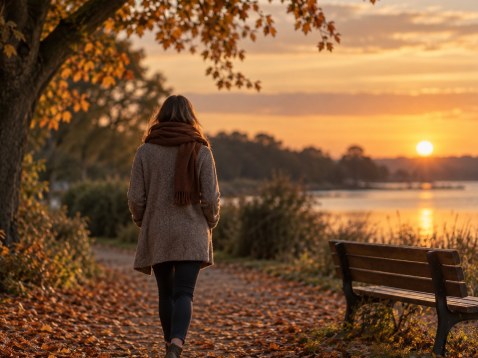
Perhaps getting out of bed feels harder. Your energy disappears earlier in the day. You want to stay at home more, see people less, or curl up on the sofa when normally you would be quite happy to get out and do something. For lots of us, the change from summer into autumn takes a bit of adjusting to. But for some people, the change in seasons seems to affect them much more than whether they prefer sunshine or winter weather.
This is where Seasonal Affective Disorder, usually shortened to SAD, comes in.
So, what actually is SAD?
SAD is a type of depression that follows a seasonal pattern. It is most commonly associated with autumn and winter, although it can occur at other times of year too.
We don't completely understand why some people are affected more than others. Reduced exposure to daylight during autumn and winter is thought to be involved, including the effect this can have on our body clock and chemicals such as melatonin and serotonin, which are involved in sleep and mood.
That doesn't mean that feeling tired when the clocks change means you have SAD.
There is a difference between noticing that you have a little less energy in winter and experiencing an ongoing change in your mood and day to day life. SAD is something that should be properly assessed rather than self diagnosed from a list of symptoms.
What might someone notice?
This will be different for everyone.
Someone experiencing SAD might notice that their mood becomes lower during particular months of the year. Things they would usually enjoy may feel less appealing. Motivation can disappear and everyday tasks can begin to feel much harder than they normally would.
Some people notice changes in their sleep or appetite. Others find concentrating more difficult, become more irritable or start withdrawing from friends, family or activities.
And sometimes the first thing somebody notices is simply:
"I don't really feel like myself at this time of year."
One of the clues with SAD can be the pattern. You might look back and realise that you have felt similarly during previous autumns or winters, then noticed things improving again as the seasons changed.
Is it SAD or just the winter blues?
I think this is an important distinction because having less enthusiasm for a cold, dark January morning doesn't necessarily mean something is wrong.
Most of us are affected by our environment to some extent. Dark mornings, shorter days, weather that keeps us indoors and changes to our usual routines can all influence how we feel.
The question is more about how much it is affecting you.
If changes in your mood, energy, sleep or motivation are persistent, are making everyday life significantly harder, or you recognise a seasonal pattern happening year after year, it may be worth talking to your GP.
You don't need to work out for yourself whether what you're experiencing is SAD, depression, stress, exhaustion or something else before asking for support.
What can help during the darker months?
There isn't one answer that will suit everybody.
Some people find it useful to become more intentional about getting outside during daylight hours, particularly when shorter days mean they can easily spend most of the available daylight indoors.
Keeping some routine, staying connected with people, moving your body in ways that feel manageable and paying attention to sleep can also support general wellbeing.
You may also have heard about light therapy or SAD lamps. These are used by some people during the winter months, but they aren't suitable for everybody. If you're considering using one, particularly if you have an eye condition, take certain medications or have another health condition that could be relevant, it is sensible to speak to a GP or another appropriate healthcare professional first.
And if you're noticing a significant or persistent change in your mental health, it's worth seeking professional advice rather than trying to manage everything yourself.
Where does counselling fit in?
Talking therapy can't change the weather or bring the summer back, unfortunately!
What it can offer is somewhere to explore what is happening for you.
When you're already feeling low, tired or disconnected, it can become very easy to withdraw. You might stop doing things because you don't have the energy, then find yourself feeling even more isolated. Thoughts can become more negative and self critical too.
Counselling gives you some space to notice these things without judgement.
Sometimes simply understanding your own patterns can be helpful. You might begin to recognise what happens to your mood as the seasons change, what tends to make things harder and what genuinely helps you feel a little more like yourself.
It also gives you somewhere to talk honestly about how you're feeling without having to put on a brave face or worry about burdening somebody else.
Perhaps this year, notice the change...
We're at that point in the year where the evenings are beginning to draw in again.
So rather than waiting until the middle of winter to wonder why everything suddenly feels harder, it might be worth simply noticing how you're doing as the season changes.
How is your energy?
Are you still doing the things that normally help you feel connected?
Are you getting outside?
Are you beginning to retreat a little more than usual?
There doesn't have to be anything dramatic about checking in with yourself. Sometimes noticing a pattern is simply useful information.
And if you do find that autumn and winter tend to be difficult for you, you don't have to wait until you're really struggling before reaching out for some support.
Thinking about counselling?
If you'd like to explore counselling and see whether working together might feel right for you, I offer a free 10 to 15 minute introductory call.
You can get in touch through the Book a Consultation button on my website to arrange a time. There's no obligation to book counselling afterwards. It's simply an opportunity to have a brief chat, ask any questions and get a sense of whether I might be the right counsellor for you. 💜