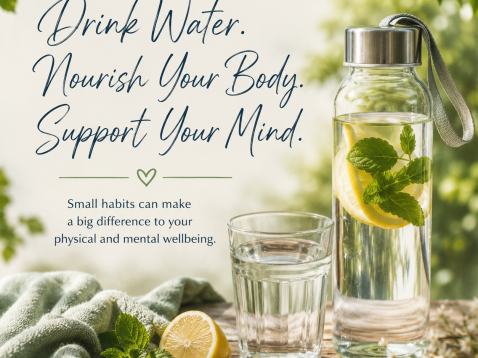
As a therapist, I often encourage clients to look at the foundations of wellbeing before anything else.
Have I eaten today?
Have I slept enough?
Have I moved my body?
Have I had enough water?
These simple questions won't solve every problem, but they can have a surprisingly powerful impact on how we feel. Hydration, in particular, is something many of us overlook, yet it plays an important role in both our physical health and emotional wellbeing.
At the time of writing, much of the UK has recently experienced periods of unusually hot weather, with health alerts and heat warnings issued in some areas. During hot weather, our bodies lose more fluid through sweating, meaning it's even more important to stay hydrated but when life is busy, water can easily become an afterthought. We might reach for another coffee, forget to refill our bottle, or simply ignore the subtle signs that our body needs more fluids. Yet something as simple as drinking enough water each day can have a surprisingly positive impact on our energy levels, concentration, mood and overall health.
Whether you're wondering how much water you should drink, looking for signs of dehydration, or wanting to improve your wellbeing naturally, understanding the importance of hydration is a great place to start.
Why Is Water So Important?
Our bodies are made up of around 60% water, and nearly every system relies on it to function properly. Water helps to:
- Regulate body temperature
- Transport nutrients and oxygen around the body
- Support digestion
- Lubricate joints
- Remove waste products
- Keep our skin healthy
- Support brain function
Even mild dehydration can affect how efficiently our body works.
The Connection Between Hydration and Mental Health
Many people are surprised to learn that dehydration can affect our mood, concentration and emotional wellbeing.
Research has found that even mild dehydration may contribute to:
- Fatigue and low energy
- Difficulty concentrating
- Brain fog
- Irritability
- Increased feelings of stress
- Headaches
- Lower mood
Have you ever felt tired, grumpy or unable to focus, only to realise later that you hadn't had much to drink all day, I will totally confess that this happens often for me (and secretly hoping this blog will hold me accountable to myself!) Sometimes what feels like emotional overwhelm can be made worse by our body's basic needs not being met.
While drinking water isn't a cure for anxiety, depression or stress, ensuring we are properly hydrated gives our brains the best chance of functioning well and coping with daily challenges. Good hydration supports cognitive function, mental clarity and emotional resilience, making it an important part of overall mental health and wellbeing.
Signs You May Not Be Drinking Enough Water
Many people don't realise they are mildly dehydrated. Common signs of dehydration can include:
- Dry mouth
- Headaches
- Tiredness or fatigue
- Dizziness
- Difficulty concentrating
- Dark yellow urine
- Reduced energy levels
Recognising these symptoms early can help you increase your fluid intake before dehydration begins to affect your daily functioning.
How Much Water Do We Actually Need?
The NHS generally recommends aiming for around 6–8 glasses of fluid per day. This includes water, sugar-free drinks, tea, coffee and milk.
For many people, this works out at around 1.5–2 litres daily.
You may need more if:
- The weather is hot
- You're exercising
- You're pregnant or breastfeeding
- You're unwell
- You're spending a lot of time outdoors
A useful guide is to check the colour of your urine. Pale straw-coloured urine usually suggests you're well hydrated, whereas darker urine may indicate that you need to drink more.
Simple Tips to Stay Hydrated Throughout the Day
If drinking enough water feels difficult, try:
- Keeping a water bottle with you in your bag or at your work station
- Drinking a glass of water when you wake up
- Having a drink alongside every meal
- Setting gentle reminders on your phone
- Adding fruit such as lemon, lime, cucumber or berries if you find plain water boring
Many people find that once they start drinking more regularly, they notice improvements in their energy, concentration and general wellbeing.
I've recently been making more of an effort to stay hydrated myself and have found that switching to a natural spring water I enjoy has helped me drink more consistently. It reminded me that sometimes healthy habits aren't about willpower, they're about making the healthy choice the easy and enjoyable one.
Whether you prefer tap water, filtered water, sparkling water or spring water, the most important thing is finding an option that helps you stay hydrated regularly. The best type of water is often simply the one you're most likely to drink.
Looking After the Basics
When we think about mental health, we often focus on coping strategies, therapy, mindfulness or self-care activities. These can all be incredibly valuable. However, sometimes it is worth checking in with the foundations first.
As a therapist, I believe hydration is so important that I ask every client about their fluid intake as part of their assessment, alongside discussing their eating habits and levels of exercise and sleep. These everyday factors can have a significant impact on both physical and emotional wellbeing.
Have I eaten today?
Have I slept enough?
Have I moved my body?
Have I had enough water?
These simple questions won't solve every problem, but they can provide a strong foundation from which we can better manage life's challenges.
The next time you're feeling tired, foggy or overwhelmed, it might be worth reaching for a glass of water. Your body and mind may thank you for it.